









Summary
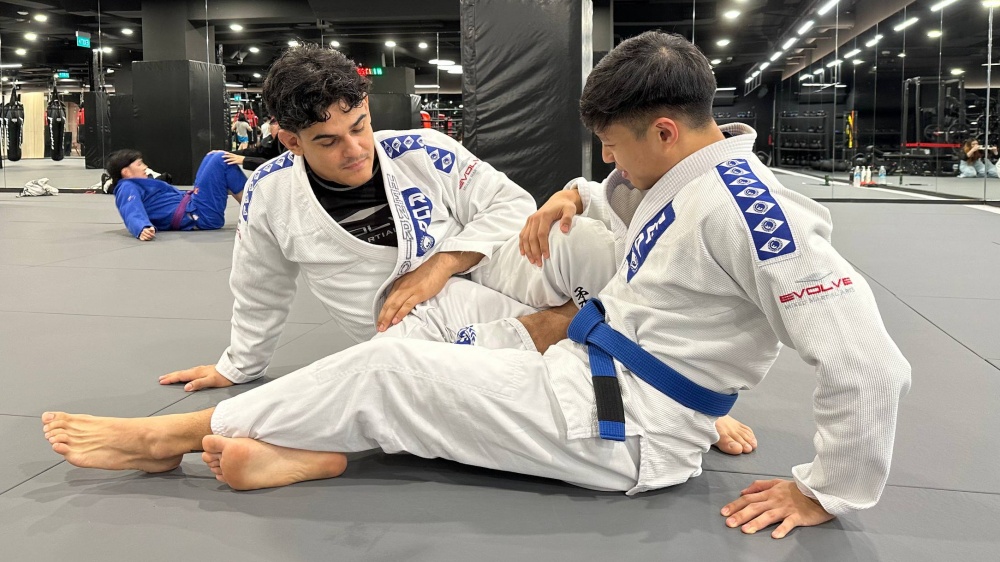
The 80 20 position is a modern leg entanglement used in Brazilian Jiu-Jitsu to control an opponent’s leg while maintaining a strong positional advantage. It is closely related to outside Ashi Garami and is commonly used as a setup for leg locks, sweeps, and transitions. Rather than relying on strength, the 80 20 position emphasizes angle, hip control, and balance.
In this position, your hips are angled away from the opponent rather than square. This angle makes it difficult for them to apply pressure or disengage, while giving you better leverage and control.
This article explains what the 80 20 position is, why it works, and how it fits into an effective leg lock strategy.
Key Takeaways
- The 80 20 position prioritizes angle and leg positioning over force.
- It offers strong control while limiting common counters.
- The position allows smooth transitions rather than rushed finishes.
Why The 80 20 Position Works
The effectiveness of the 80 20 position comes from off-balancing. By shifting your body to the outside of the opponent’s leg, you reduce their ability to rotate, stand, or pressure forward.
This angled control also protects you. Because you are not directly underneath the opponent, their weight is less likely to collapse onto you. This makes the position stable and energy efficient.
Key Positioning Details
- Hip Angle: Your hips should be turned away from the opponent. This angle is what separates the 80 20 from more square leg entanglements.
- Leg Placement: Your legs clamp around the opponent’s thigh and knee line, limiting their ability to turn or pull free.
- Upper Body Position: Your upper body stays engaged and balanced rather than flat. This allows you to adjust quickly as the opponent reacts.
Common Entries Into The 80 20 Position
- From 50/50: As the opponent advances, you can capture one leg and angle your hips to the outside, settling into the position.
- From Single Leg X: Rotating your hips outward transitions naturally into the 80 20 position.
- During Scrambles: When opponents try to disengage from leg attacks, the 80 20 often appears as a stabilizing transition rather than a static position.
Attacking Options From The 80 20
The 80 20 position is not only about submissions. It offers multiple pathways.
Common options include straight ankle locks, transitions to knee line control, sweeps that off-balance the opponent, and positional advances into other leg entanglements.
Rather than forcing a finish, many practitioners use the position to control reactions and wait for openings.
Defensive Benefits Of The 80 20
Because of the angle, the 80 20 position limits many common counters. Opponents struggle to step over, smash, or rotate freely.
This makes it a safer option for maintaining leg control, especially against opponents who are comfortable applying pressure.
Common Mistakes To Avoid
- Staying square instead of angled.
- Allowing the opponent to free their knee line.
- Rushing submissions without balance.
- Lying flat instead of staying active.
- Ignoring upper body engagement.
Correcting these mistakes improves both control and safety.
How The 80 20 Fits Into Modern BJJ
The 80 20 position reflects the modern emphasis on control before submission. Many practitioners use it to slow the exchange, manage balance, and dictate pace.
Rather than being a finishing position on its own, it often serves as a bridge between attacks and transitions. Watch the above video demonstration by Lachlan Giles as he demonstrates how he uses it to transit to the outside sankaku.
FAQs On The 80 20 Position
Q: Is The 80 20 Position The Same As Outside Ashi Garami?
A: They are closely related, but the 80 20 emphasizes a stronger outside angle and weight distribution.
Q: Is The 80 20 Position Legal In Competition?
A: Yes. The position itself is legal across most rule sets. Submission legality depends on the attack used.
Q: Can Beginners Learn The 80 20 Position?
A: Yes. The concept is accessible when taught with proper fundamentals.
Q: Is The 80 20 Position Only For Leg Locks?
A: No. It is also useful for sweeps and positional control.
Q: Does Gi Or No-Gi Change The Position?
A: The mechanics remain the same in both.
Final Thoughts
The 80 20 position is a powerful example of how angle and control can outweigh strength in Brazilian Jiu-Jitsu. By off-balancing the opponent and limiting their movement, it creates a stable platform for attacks, transitions, and positional dominance. Understanding this position helps practitioners develop a more patient, efficient, and controlled leg entanglement game.
You may also like:
Here’s How to Use The Banana Split In BJJ

Summary The stiff arm escape is a fundamental defensive concept in Brazilian Jiu-Jitsu used to create space and prevent pressure from settling. Rather than relying on strength or explosive movement, the stiff arm escape uses…
Summary A large part of a beginner’s Brazilian Jiu-Jitsu journey will focus on selecting a handful of submissions. This starts from the time you begin to tap other beginners in class. As your development progresses,…
Summary The leg ride is a powerful control concept used in Brazilian Jiu-Jitsu to limit movement, slow down escapes, and maintain dominant top position. Borrowed from wrestling but adapted for BJJ, leg rides allow you…
Summary The reverse mount is an unconventional but increasingly relevant position in Brazilian Jiu-Jitsu. Instead of facing your opponent’s head like the traditional mount, the reverse mount places you facing their legs while maintaining top…
Summary The technical mount is one of the most effective control positions in Brazilian Jiu-Jitsu. It sits between the traditional mount and back control, offering strong balance, pressure, and access to multiple transitions. Instead of…
Summary Shrimping refers to the action of moving your hips away from your opponent by pushing off the mat with your feet and shoulders. The movement resembles a shrimp curling its body, which is where…
Summary Muay Thai has evolved rapidly in the modern era, reaching a global audience while producing a new generation of elite fighters. Today’s top athletes blend traditional technique with modern athleticism, competing across stadiums in…
Summary Footwork plays a crucial role in modern mixed martial arts. While MMA combines multiple disciplines, many of the movement principles used by elite fighters come directly from boxing. Boxing footwork influences how MMA fighters…
Summary The spinning hook kick is one of the most visually striking techniques in martial arts. While it is less common than round kicks or teeps, it can be highly effective when used with proper…
Summary Screens are now a natural part of daily life for children, from schoolwork to entertainment. As we move into 2026, many parents in Singapore are looking for realistic ways to manage screen time without…
Summary Learning new skills is not just for children or students. For adults, picking up new skills plays a major role in maintaining brain health, mental flexibility, and emotional well-being. In Singapore, lifelong learning has…
Summary Ankle weights are excellent workout tools for people of all ages. They are easy to transport and allow you to train anywhere. Ankle weights can be used to increase your explosiveness, speed, and vertical…