

![[WATCH] T20 World Cup 2026: Gautam Gambhir hosts dinner for Team India players ahead of Namibia clash](https://lbsports88.com/wp-content/uploads/2026/02/watch-t20-world-cup-2026-gautam-gambhir-hosts-dinner-for-team-india-players-ahead-of-namibia-clash-360x180.jpg)











Summary
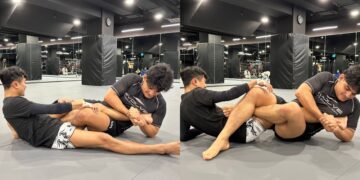
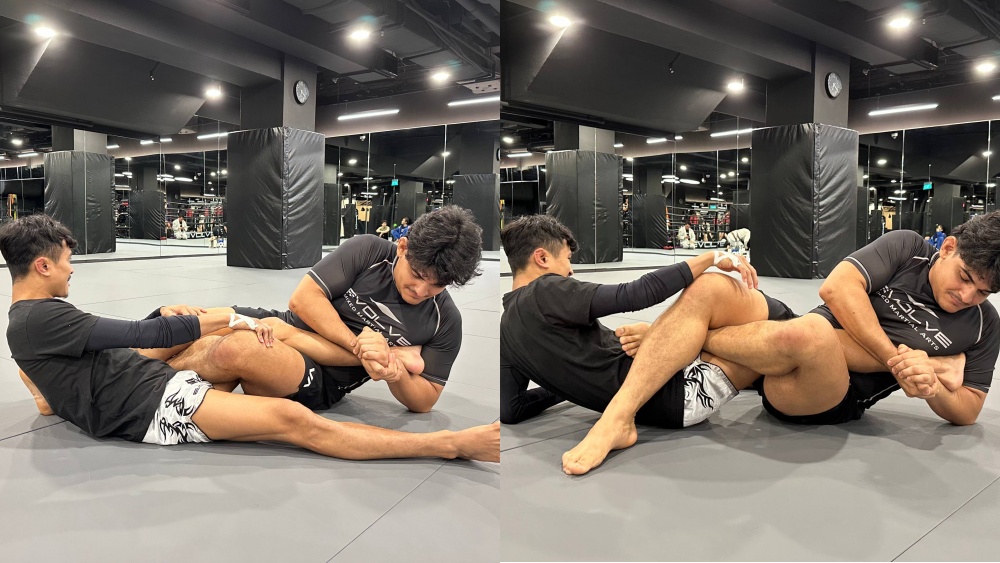
Heel hooks are among the most powerful submissions in Brazilian Jiu-Jitsu. When applied correctly, they can end a match instantly. But not all heel hooks are the same. The inside heel hook and outside heel hook differ in mechanics, positioning, risk, and strategic use. Understanding how each works helps grapplers apply them more safely, more effectively, and with better awareness during training and competition.
Key Takeaways
-
Heel hooks target the knee’s structural alignment, making them highly effective but technically demanding.
-
Inside vs. outside heel hooks differ in rotation, setup, and control—inside attacks internal knee rotation with tighter control, outside attacks external rotation often during transitions.
-
Effectiveness depends on positioning, timing, and context, not force or memorized setups.
Heel hooks attack the knee joint by controlling the leg and rotating it through the heel. Unlike submissions that rely on pressure or flexibility, heel hooks target structural alignment. That is why they are both highly effective and highly technical.
A well-applied heel hook often requires:
- Tight control of the opponent’s hips.
- Isolation of the knee line.
- Proper rotational mechanics.
Without those elements, the submission becomes inefficient and risky to apply.
What Is The Inside Heel Hook?
The inside heel hook rotates the opponent’s heel inward, creating internal rotation of the knee. This is often applied when your body positioning is aligned inside your opponent’s leg.
Common entries include:
The inside heel hook tends to feel tighter and more immediate once control is established.
Why It’s Effective
The inside heel hook attacks the knee’s internal rotation, which many athletes are less conditioned to resist. Once the knee line is trapped, escape windows are smaller, and the breaking pressure develops quickly.
It is widely considered one of the most dangerous submissions in modern no-gi grappling for this reason.
What Is The Outside Heel Hook?
The outside heel hook rotates the heel outward, creating external rotation on the knee. The body positioning typically sits more outside the opponent’s leg alignment.
Common setups include:
- Standard Ashi Garami
- 50/50 leg entanglements
- Outside Ashi positions
It requires slightly different hip positioning and angle control compared to the inside variation.
Why It’s Effective
The outside heel hook often comes from transitions and scrambles. It can be set up quickly and applied before the opponent fully recognizes the danger.
While some athletes have more flexibility in external rotation, once control is tight, the submission becomes equally threatening.
Key Differences Between Inside And Outside Heel Hooks
The difference is not just direction. It affects setup, control, and escape dynamics.
Inside heel hooks:
- Attack internal knee rotation.
- Often tighter once secured.
- Common in modern leg lock systems.
- Harder to escape when the hips are controlled.
Outside heel hooks:
- Attack external knee rotation.
- Easier to transition into during scrambles.
- Often appear from positional battles.
- Require precise hip angle to finish.
Neither is inherently better. Their effectiveness depends on positioning and timing.
When Each Submission Works Best
Inside heel hooks are typically strongest when:
- The opponent’s knee line is fully trapped.
- You have strong hip control.
- The entanglement is stable and controlled.
Outside heel hooks often work best when:
- The opponent is mid-transition.
- You create angles quickly.
- You attack before they establish a defensive structure.
Understanding context matters more than memorizing setups.
Safety And Awareness In Training
Heel hooks demand respect. Because they attack the knee joint directly, damage can occur quickly if applied without control.
Training responsibly means:
- Applying pressure gradually.
- Communicating with training partners.
- Releasing immediately when a tap is signaled.
Learning heel hooks in a structured environment ensures students understand both application and defense safely.
Why Heel Hooks Matter In Modern Grappling
Heel hooks have become central to modern No-Gi Brazilian Jiu-Jitsu and MMA grappling. High-level competitors use them not just for submissions, but to control scrambles, dictate pace, and create positional advantages.
Even if you do not specialize in leg locks, understanding inside and outside heel hooks helps:
- Improve defensive awareness.
- Recognize dangerous positions early.
- Develop smarter positional control.
They are no longer niche techniques. They are foundational knowledge.
Final Thoughts
The inside and outside heel hooks represent two sides of the same concept. Both are powerful. Both are technical. And both require precision rather than force.
Effectiveness comes from understanding when to use each one, not from choosing one over the other.
For grapplers, learning heel hooks is less about chasing submissions and more about understanding how control, timing, and mechanics come together. When those elements align, the finish becomes almost inevitable.
FAQ: Inside Vs Outside Heel Hooks
Q: Which Heel Hook Is Stronger, Inside Or Outside?
A: Neither is universally stronger. Effectiveness depends on positioning, control, and timing.
Q: Are Heel Hooks Allowed In All Competitions?
A: Rules vary. Many Gi competitions restrict heel hooks, while No-Gi events often allow them at advanced levels.
Q: Are Heel Hooks Dangerous?
A: They can be if applied carelessly. Proper training and communication make them safe to learn.
Q: Should Beginners Learn Heel Hooks?
A: Yes, but under structured instruction that prioritizes control and defensive awareness.
Q: Do Heel Hooks Work In MMA As Well As BJJ?
A: Yes. Heel hooks are increasingly used in MMA, especially in grappling-heavy fights where leg entanglements occur.
You may also like:
Understanding Caio Terra And His Ankle Lock Technique In BJJ

Summary The Caio Terra ankle lock is a refined variation of the straight ankle lock that uses the hips, core, and angle of pressure to apply the submission. Popularized by one of the most technical…
Summary The 80 20 position is a modern leg entanglement used in Brazilian Jiu-Jitsu to control an opponent’s leg while maintaining a strong positional advantage. It is closely related to outside Ashi Garami and is…
Summary The stiff arm escape is a fundamental defensive concept in Brazilian Jiu-Jitsu used to create space and prevent pressure from settling. Rather than relying on strength or explosive movement, the stiff arm escape uses…
Summary A large part of a beginner’s Brazilian Jiu-Jitsu journey will focus on selecting a handful of submissions. This starts from the time you begin to tap other beginners in class. As your development progresses,…
Summary The leg ride is a powerful control concept used in Brazilian Jiu-Jitsu to limit movement, slow down escapes, and maintain dominant top position. Borrowed from wrestling but adapted for BJJ, leg rides allow you…
Summary The reverse mount is an unconventional but increasingly relevant position in Brazilian Jiu-Jitsu. Instead of facing your opponent’s head like the traditional mount, the reverse mount places you facing their legs while maintaining top…
Summary Mixed Martial Arts is no longer just a male-dominated sport. More women than ever are stepping into MMA gyms for fitness, self-defense, and personal growth. But starting can feel intimidating without a clear roadmap….
Summary Valentine’s Day in Singapore often means flowers, restaurants, and the usual dinner plans. Nice, but predictable. If you’re looking to do something memorable this year, there are plenty of unconventional ways to spend the…
Summary Choosing the right martial arts gym can shape your entire training journey. For women, the decision often goes beyond location and schedule. Safety, culture, coaching quality, and community all matter. A good gym should…
Summary In a sport where youth is often mistaken for inevitability, Sam‑A Gaiyanghadao continues to challenge expectations. Still competing at the highest level in ONE Championship, Sam-A is not fighting to preserve a legacy. He…
Summary Being a well-rounded MMA fighter means more than excelling in a single discipline. Modern mixed martial arts demands the ability to strike, grapple, defend, and make decisions under pressure across multiple phases of a…
Summary When it comes to staying active, two of the most common options people consider are martial arts training and traditional gym workouts. Both can be effective ways to improve health, strength, and overall fitness….

![[WATCH] T20 World Cup 2026: Gautam Gambhir hosts dinner for Team India players ahead of Namibia clash](https://lbsports88.com/wp-content/uploads/2026/02/watch-t20-world-cup-2026-gautam-gambhir-hosts-dinner-for-team-india-players-ahead-of-namibia-clash-75x75.jpg)







![[WATCH] T20 World Cup 2026: Gautam Gambhir hosts dinner for Team India players ahead of Namibia clash](https://lbsports88.com/wp-content/uploads/2026/02/watch-t20-world-cup-2026-gautam-gambhir-hosts-dinner-for-team-india-players-ahead-of-namibia-clash-120x86.jpg)

![[WATCH] T20 World Cup 2026: Gautam Gambhir hosts dinner for Team India players ahead of Namibia clash](https://lbsports88.com/wp-content/uploads/2026/02/watch-t20-world-cup-2026-gautam-gambhir-hosts-dinner-for-team-india-players-ahead-of-namibia-clash-350x250.jpg)
