

![[WATCH] T20 World Cup 2026: Rovman Powell treats Wankhede fans with gigantic 106-metre six versus Zimbabwe | CricTracker](https://lbsports88.com/wp-content/uploads/2026/02/watch-t20-world-cup-2026-rovman-powell-treats-wankhede-fans-with-gigantic-106-metre-six-versus-zimbabwe-crictracker-360x180.jpg)











Summary
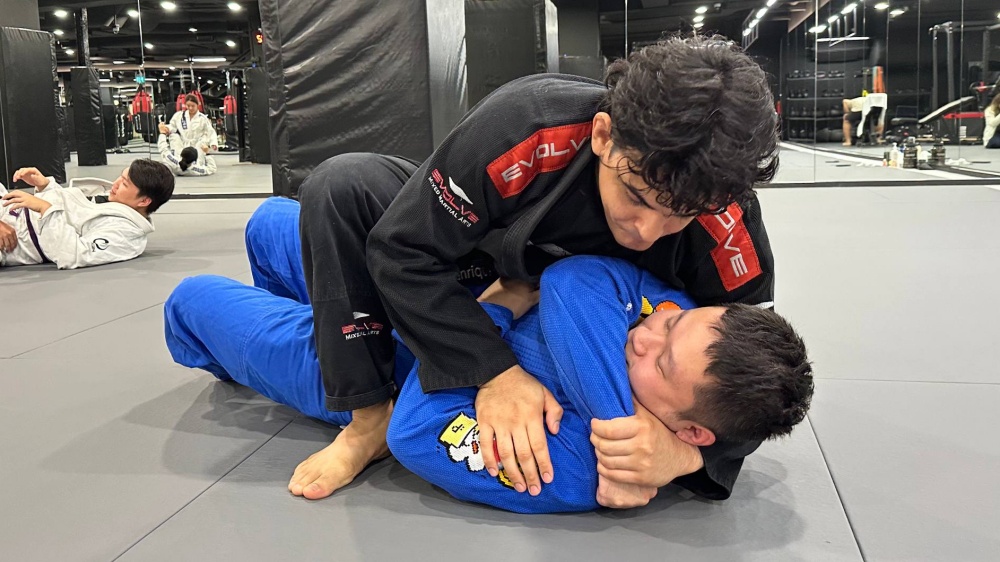
In BJJ, control always comes before submission. One of the most effective ways to limit an opponent’s movement is by isolating an arm. The arm trap is a powerful concept that appears in multiple positions, from mount to back control, and it often turns defensive scrambles into dominant finishes.
Understanding how the arm trap works can instantly elevate your positional control. Whether you are a beginner learning fundamentals or an experienced grappler refining details, mastering the arm trap adds structure and efficiency to your BJJ game.
Key Takeaways
- The arm trap in BJJ is a control technique that isolates one of your opponent’s arms, limiting their ability to defend and creating immediate positional advantage.
- It is commonly applied from dominant positions such as mount, back control, and during transitional exchanges, making it a versatile tool across multiple phases of a match.
- Effective arm trapping relies more on proper hip positioning and weight distribution than squeezing strength, and when executed correctly, it opens up high percentage submission opportunities.
What Is The Arm Trap In BJJ
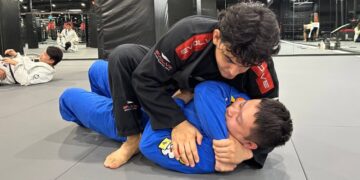
The arm trap in BJJ refers to isolating one of your opponent’s arms so they cannot use it to defend or escape. Instead of attacking both sides of the body, you remove one defensive tool entirely.
This concept appears in several dominant positions. From the mount, trapping an arm prevents effective bridging or framing. From back control, it limits hand fighting and makes choke finishes much easier.
The arm trap is not a single technique. It is a control principle that can be adapted depending on the situation. That flexibility makes it a core element of modern grappling strategy.
Why The Arm Trap Is So Effective
In BJJ, defense often depends on frames and hand fighting. When you remove one arm from the equation, the opponent loses balance and structural support.
For example, from the mount, if your opponent attempts to bridge, they rely on both arms to create space. If one arm is pinned across their body or trapped under your leg, their escape power drops significantly. This creates opportunities for submissions like the arm triangle or mounted back takes.
From the back control, trapping an arm reduces the opponent’s ability to peel your choking hand. With only one arm available, their defensive options become predictable. That predictability allows you to predict upcoming chain attacks with greater confidence.
How To Set Up The Arm Trap From The Top Mount
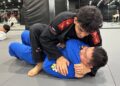
One of the most common scenarios is utilizing the arm trap in the mount position. Start in a strong mount position with knees tight and hips heavy.
Step One: Use your hands to guide your opponent’s arm across their body. This can be done by pushing their wrist toward the opposite shoulder.
Step Two: Slide your knee high near their head, pinning the trapped arm in place. Keep your weight centered over their chest to prevent explosive bridging.
Step Three: Maintain chest-to-chest pressure while adjusting your hips to stay balanced.
From here, some common attacks include the arm triangle, mounted triangle, and the back take if they turn.
The key detail is pressure. If you focus only on holding the arm without controlling posture, the trap will fail.
Using The Arm Trap From The Back Control
From the back control, the arm trap often happens during hand fighting. When your opponent grabs your choking arm, you can redirect their defending hand and pin it with your leg or body.
One common method is to use your top leg to trap their arm against their torso. This frees your hands to focus on securing the choke.
Once one arm is removed from defense, finishing the rear-naked choke becomes significantly easier. With limited mobility, your opponent must rely on positional escapes instead of hand control, which are much harder to execute under pressure.
Common Mistakes With The Arm Trap
One mistake is trying to muscle the arm into position. BJJ rewards leverage and timing, not brute strength.
Another error is neglecting the base. When focusing too much on isolating the arm, some practitioners lose balance and get swept.
Finally, beginners often forget transitions. The arm trap is not the end goal. It is a platform for advancing position or finishing submissions.
FAQ On Utilizing The Arm Trap For BJJ
Q: Who Should Learn The Arm Trap?
A: Everyone! The arm trap teaches important fundamentals like control, pressure, and positional awareness, all of which are essential regardless of your level in BJJ.
Q: Is The Arm Trap A Submission?
A: No. The arm trap is a control concept. It sets up submissions, but is not a finishing technique by itself.
Q: Can The Arm Trap Be Used In No-Gi BJJ?
A: Absolutely! The arm trap relies on body positioning and leverage rather than clothing grips, making it effective in both Gi and No-Gi.
Q: What Submissions Pair Well With The Arm Trap?
A: Common follow-ups include the arm triangle, mounted triangle, and rear naked choke.
Q: Why Does Trapping One Arm Make Such A Big Difference?
A: Removing one arm reduces your opponent’s defensive options. With fewer frames and grips available, their escapes become slower and more predictable.
Final Thoughts
The arm trap in BJJ highlights a core truth of grappling. Control creates opportunity. By isolating one arm, you simplify the fight and increase your finishing percentage.
Instead of chasing submissions immediately, focus on building dominant control first. Mastering the arm trap will sharpen your understanding of pressure, balance, and positional dominance. In Brazilian Jiu-Jitsu, those fundamentals are what separate reactive grapplers from calculated ones.
You may also like:
Mastering The Tren Lock For BJJ

Summary While many beginners focus on submissions from the top, experienced grapplers know that leg control systems create the foundation for sweeps, back takes, and dominant transitions. One of these systems is the bear trap….
Summary In Brazilian Jiu-Jitsu, small positional adjustments can create major control advantages. Just by mastering and understanding specific control systems can help beginners feel less lost during live rolls. Another aspect is understanding the mechanics…
Summary In martial arts, small details often create big breakthroughs. Most of the time, growth comes from mastering fundamentals, and Brazilian Jiu-Jitsu teaches the same lesson on the mats. One of those overlooked fundamentals is…
Summary Heel hooks are among the most powerful submissions in Brazilian Jiu-Jitsu. When applied correctly, they can end a match instantly. But not all heel hooks are the same. The inside heel hook and outside…
Summary The Caio Terra ankle lock is a refined variation of the straight ankle lock that uses the hips, core, and angle of pressure to apply the submission. Popularized by one of the most technical…
Summary The 80 20 position is a modern leg entanglement used in Brazilian Jiu-Jitsu to control an opponent’s leg while maintaining a strong positional advantage. It is closely related to outside Ashi Garami and is…
Summary In boxing, punches get attention, but footwork wins fights. The double step is a subtle yet powerful movement that allows fighters to close distance, create angles, and disrupt rhythm without overcommitting. While it looks…
Summary The high guard is one of the most reliable defensive systems in boxing. From amateur competitors to world champions, many fighters rely on it to absorb pressure and neutralize aggressive opponents. But while it…
Summary Stella Hemetsberger has quickly become one of the most compelling names in Muay Thai. As a two-sport World champion in ONE Championship, she represents the new generation of strikers who combine traditional technique with…
Summary Training hard is only half the equation. Whether you train BJJ, Muay Thai, lift weights, or run marathons, recovery determines how well your body adapts and improves. In 2026, recovery is no longer just…
Summary Shyness is a natural part of growing up for many children. Some prefer to observe before participating. Others need time to feel comfortable in social environments. Martial arts offers a structured and supportive space…
Summary Chinese New Year is a time for reunion dinners, snacks, and celebration. Its also one of the easiest seasons to overindulge without realizing it. The good news is you do not need to avoid…

![[WATCH] T20 World Cup 2026: Rovman Powell treats Wankhede fans with gigantic 106-metre six versus Zimbabwe | CricTracker](https://lbsports88.com/wp-content/uploads/2026/02/watch-t20-world-cup-2026-rovman-powell-treats-wankhede-fans-with-gigantic-106-metre-six-versus-zimbabwe-crictracker-75x75.jpg)








![[WATCH] T20 World Cup 2026: Rovman Powell treats Wankhede fans with gigantic 106-metre six versus Zimbabwe | CricTracker](https://lbsports88.com/wp-content/uploads/2026/02/watch-t20-world-cup-2026-rovman-powell-treats-wankhede-fans-with-gigantic-106-metre-six-versus-zimbabwe-crictracker-120x86.jpg)