




















Summary
Professional boxing is governed by four major sanctioning bodies that award world championship belts across multiple weight divisions: the World Boxing Association (WBA), World Boxing Council (WBC), International Boxing Federation (IBF), and World Boxing Organization (WBO). Unlike team sports with a single governing league, boxing’s championship structure is decentralised, which means a fighter can hold multiple world titles simultaneously — or none at all, despite being the best in their division. This article breaks down each of the four major organisations, explains how they rank fighters and sanction title fights, covers the difference between lineal, unified, and undisputed champions, and looks at why the belt system matters to both fighters and fans. As WBA Boxing World Champion and Evolve MMA instructor Drian Francisco puts it, “Understanding the belt system isn’t just trivia — it’s the difference between knowing who the real champion is and being misled by a title that doesn’t tell the whole story.” Whether you’re new to boxing or looking to deepen your knowledge of the sport, this guide gives you the full picture.
Key Takeaways
- The WBA, WBC, IBF, and WBO are the four major sanctioning bodies in professional boxing. Each organisation independently maintains its own world rankings and awards championship belts across all 17 weight divisions.
- A fighter can be a world champion without being the best in their division. Because four separate organisations each crown their own champion, the title picture in any weight class can be crowded and confusing without context.
- Unified and undisputed status are the true measures of dominance. A unified champion holds two or more major belts; an undisputed champion holds all four simultaneously — one of the rarest achievements in the sport.
- Each organisation has its own history, philosophy, and belt structure. The WBA is the oldest, the WBC is widely considered the most prestigious, the IBF is the strictest on mandatory defences, and the WBO was the last to gain full international recognition.
- Lineal championship is a separate concept from belt ownership. The lineal champion — “the man who beat the man” — traces an unbroken line of succession from the original world champion, regardless of which sanctioning body is involved.
- The belt system has been shaped by both progress and controversy. From safety reforms like reducing rounds from 15 to 12, to corruption scandals involving bribes and racketeering, the history of these organisations reflects the politics of professional sport at its most complex.
Championship boxing dates as far back as the second half of the 19th century, when John L. Sullivan became the first man to be called a world champion. There were no official sanctioning bodies at the time, but Sullivan still got the honors of being the first boxing world champion.
The first officially sanctioned boxing world title went to the legendary Jack Dempsey when he defeated Georges Carpentier in the championship finals in 1921. The National Boxing Association (NBA) organized the event, which was the first sanctioned world title fight in professional boxing.
The NBA was the national boxing federation in the United States at the time, but the organization eventually changed its name to the World Boxing Association in 1962 and became one of the four major sanctioning bodies governing the sport.
Before the NBA was founded, a magazine called the “Police Gazette” maintained a list of world champions. Ironically, the magazine wasn’t even a boxing magazine, yet it filled the role for the sport. Today’s version of the Police Gazette would be The Ring magazine.
The WBA’s first rival emerged a year after the NBA was rebranded. The World Boxing Council was founded in Mexico City to create a unified regulatory system for international professional boxing fights.
Infighting within the WBA led to the formation of the United States Boxing Association in 1976. The USBA was founded by the American branch of the organization that wanted to legitimize U.S. boxing separately. The international branch of the USBA was started in 1983 and renamed the International Boxing Federation a year later. This became the third organization to serve as a major sanctioning body in boxing.
The fourth significant sanctioning body in boxing is the World Boxing Organization (WBO), which was founded in 1988 in Puerto Rico. It took a while for the WBO to get international recognition. The Japanese Boxing Commission helped to legitimize the organization in 2012.
While separate entities, the four major sanctioning bodies in boxing are unified regarding most things. They all award belts and titles for the best fighters in the 17 weight classes used in boxing, and they all formally recognize each other.
However, there are some differences in how titles are awarded. For example, the WBA has four titles awarded to champions: interim, regular, super, and gold. This approach is unique to the organization since most sanctioning bodies only have one main belt for each class.
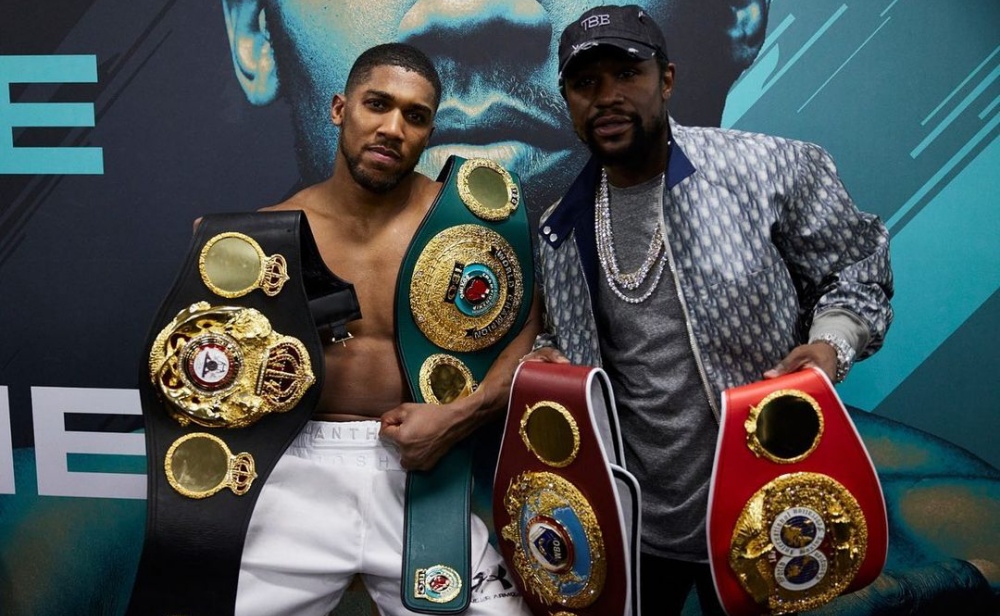
Despite their differences, the four organizations that sanction boxing matches work together to give boxing fans the best fights possible. A fighter becomes an undisputed world champion when they claim all four belts from the major sanctioning bodies.
Understanding How The Sanctioning Bodies In Boxing Work
The primary function of a sanctioning body is to manage rankings for the different divisions they cover. Championship belts are awarded to the champion of each weight class, and these belts change hands whenever a champion loses. Champions are sometimes stripped of their belts for issues like not taking on mandatory challengers.
World titles sanctioned by the four major organizations in boxing are the most prestigious belts, but smaller sanctioning bodies award lesser regional titles. Some of these smaller sanctioning bodies, like the International Boxing Organization (IBO), even have their own world titles, which are not as prestigious as those from the major organizations.
Let’s take a more detailed look at the main organizations that govern the sport of boxing:
1) World Boxing Association (WBA)
The World Boxing Association is the oldest major sanctioning body in boxing. Founded in 1921 as the National Boxing Association, the WBA awards four championships for each division. An “interim” champion, a “regular” champion, a “super” champion, and a “gold” champion. A regular champion becomes a WBA super champion when they capture a WBO, WBC, or IBF title. They’re awarded the super title, while the regular title is vacated for two contenders to fight for.
The WBA’s belt system isn’t popular with fans as many feel it waters down what it means to be a champion. The interim title is only used when the champion can’t defend their title for whatever reason, while there are no clear rules regarding how a boxer becomes a gold champion.
The WBA uses an elimination system to determine who the mandatory challengers are. The top two rankings of each division are left blank, and top contenders have to take part in elimination fights to earn either spot. The winners of these elimination fights become the regular champion’s mandatory challengers.
The WBA organized its first bout in 1921. The organization worked more like a boxing commission, publishing a list of top challengers and sanctioning title fights. There were no purse bids or sanctioning fees back then, and the organization didn’t appoint its own officials for title matches.
The World Boxing Association has had its share of corruption scandals over the years. In 1981, a boxing judge accused the organization of influencing judges to give their champions more favorable scores. He also claimed he received bribes from the organization to influence fights. Things got even more scandalous when Top Rank promoter Bob Arum claimed he had to pay WBA referees to get more favorable outcomes for his fighters.
2) World Boxing Council (WBC)
The World Boxing Council is commonly regarded as the most prestigious sanctioning body in boxing. The organization was founded a year after the WBA was founded in 1963, and it’s been responsible for some of the highest-profile fights in boxing history, including the Fury vs. Wilder trilogy.
Many boxing experts view the WBC champion at any weight class as the true division champion. The WBC has four titles for each division: The Diamond belt, the Silver belt, the Eternal belt, and the regular belt.
The Diamond belt is typically awarded to the winner of historic fights. For example, Floyd Mayweather was awarded the belt after his super-fight against Manny Pacquiao. Mayweather also received an Emerald belt valued at over a million dollars from the WBC. The Eternal belt is given to world champions who retired undefeated or fighters who never lost during title fights. The WBC created a one-time “Supreme” belt for Floyd Mayweather to recognize him as the best fighter of his generation.
WBC champions are expected to defend their belt at least once yearly, but they can avoid this by paying a step-aside fee.
The World Boxing Council was the first sanctioning body to reduce boxing matches from 15 to 12 rounds. The decision came after the death of Kim Duk-Koo after his exhausting 14 rounds with Ray Mancini. The other sanctioning bodies immediately followed suit, and professional boxing matches have been limited to 12 rounds ever since.
Some of the big-name champions that have held WBC titles include Muhammad Ali, Canelo Alvarez, Roberto Duran, Floyd Mayweather, Bernard Hopkins, Hector Camacho, Manny Pacquiao, Erik Morales, Thomas Hearns, and Vitali Klitschko.
Like the other sanctioning bodies, the WBC has had its share of controversies, like when Roy Jones Jr. relinquished his belt and later changed his mind. This was after Graciano Rocchigiani had already fought for and won the belt in Jones’ absence. Yet, the WBC broke many of its rules to reinstate Jones as a champion simply because he was the more prominent name. Graciano eventually sued the WBC over their decision to reinstate Jones, and a judge awarded him 30 million dollars.
3) World Boxing Organization (WBO)
The World Boxing Organization is the youngest of the four major sanctioning bodies. It was founded in 1988 and wasn’t recognized as a significant title until 2004 when the WBC gave the organization its stamp of approval.
As is the case with the WBC, WBO champions are expected to defend their belts at least once per year. They can be forced to vacate their title if they fail to meet this standard.
The WBO started arranging international boxing matches shortly after it was founded, but they struggled to gain credibility in the U.S. Some of their heavyweight champions even relinquished their belts to pursue better options with the other sanctioning bodies. Even The Ring magazine – the official magazine for boxing – didn’t recognize the organization at first.
However, the WBO did enjoy some success in the lighter divisions early on as they managed to get an impressive list of champions like Naseem Hamed, Johny Tapia, and Chris Eubanks. Other notable boxers who competed in WBO bouts include Wladimir Klitschko, Oscar De La Hoya, and Marco Antonio Barrera.
The WBO found recognition quicker in Europe, where they were immediately given the same recognition as the WBA, WBC, and IBF.
Many in the boxing community still view the WBA as the least of the major sanctioning bodies, but their titles are now recognized worldwide.
4) International Boxing Federation
The International Boxing Federation is the second-youngest organization on our list, founded in 1977. It started as a regional sanctioning body that worked with the United States Boxing Association, but it eventually gained significant recognition in 1983.
Like the WBA, the IBF uses an elimination bout system to determine the number one and two contenders in each division. A fighter who wins the top or second spot automatically becomes a mandatory challenger for the champion.
The IBF quickly earned recognition as one of the top sanctioning bodies in boxing, but its reputation took a massive hit in 1999 when its founder, Robert W. Lee, was accused of taking bribes, racketeering, money laundering, and tax evasion.
These charges against the IBF were a massive blow to their credibility; some even feel their recognition as a major sanctioning body was bought, not earned.
One positive thing about the International Boxing Federation is that they only have one belt for their divisions. They are also the only major sanctioning body that strips champions who refuse to defend their belts.
Notable Non-Major Sanctioning Bodies
Some of the smaller sanctioning bodies in boxing include:
- International Women’s Boxing Federation
- American Boxing Organization
- World Boxing Society
- Japan Pro Boxing Association
- International Boxing Union
Different Types Of Boxing Champions
With four major sanctioning bodies regulating boxing, figuring out who the real champion of any given division can be complicated, so a champion ranking system was developed to separate the best of the best from everyone else. Some of the different titles used to describe champions based on their accomplishments inside the ring include:
1) Lineal Champion
The term “lineal champion” is often used to refer to the boxer who beats an undisputed champion. It is otherwise known as “The man who beat the man.” The expression goes as far back as the 1800s. A modern example of a lineal champion would be Tyson Fury after he beat Wladimir Klitschko to win the IBF, WBO, and WBA super-titles. Fury gave up his belt due to personal issues, but since he beat Klitschko and never lost his titles inside the ring, that made him a lineal champion.
The four versions of lineal boxing champions are:
- BoxingScene lineal champion
- The Ring lineal champion (formerly the biggest lineal title)
- The Transnational Boxing Rankings Board lineal champion (the current biggest lineal title)
- The Cyber Boxing Zone lineal champion
Tyson Fury is the current Transnational Boxing Rankings Board lineal champion.
2) Unified Champion
A unified champion in boxing is a fighter who holds titles with two or more of the major sanctioning bodies.
3) Undisputed Champion
An undisputed champion is a boxer who holds all four belts from the major sanctioning bodies. Some of the undisputed champions in the modern era include Terence Crawford, Oleksandr Usyk, and Saul “Canelo” Alvarez.
FAQs About Boxing Belts
Q: Why Are There So Many Boxing Belts?
A: Unlike leagues such as the UFC or NBA, boxing does not have a single governing body. Instead, independent sanctioning organizations rank fighters and sanction championship bouts. Over time, four organizations emerged as the most respected governing bodies: the WBA, WBC, IBF, and WBO. Each awards its own world champion in every weight division.
Q: Which Boxing Belt Is The Most Important?
A: There is no single “most important” belt among the four major organizations. Titles from the WBA, WBC, IBF, and WBO are all considered legitimate world championships. However, some belts like the WBC championship are often viewed as historically prestigious due to the lineage of legendary champions who have held them.
Q: What Does It Mean To Be An Undisputed Champion In Boxing?
A: An undisputed champion is a fighter who holds all four major belts in the same weight class at the same time. Achieving undisputed status is extremely rare and often requires winning multiple unification bouts against other champions.
Q: What Is The Difference Between Unified And Undisputed Champions?
A: A unified champion holds two or three of the major belts in one division. An undisputed champion holds all four major titles simultaneously, making them the clear top fighter in that weight class.
Final Thoughts
Boxing’s championship structure is unlike any other major sport. The existence of four independent sanctioning bodies means the title picture in any given weight class can be complicated — but understanding how each organisation works, what each belt represents, and how lineal, unified, and undisputed status differ from one another makes the sport significantly richer and more rewarding to follow.
For fighters, winning a world title from any of the four major organisations represents a career-defining achievement. For fans, knowing the difference between a mandatory defence and an optional tune-up, or understanding why an undisputed title fight is so rare and so significant, adds a layer of appreciation that transforms how you watch the sport.
The WBA, WBC, IBF, and WBO are imperfect institutions — their histories include corruption, politics, and controversy alongside genuine moments of reform and progress. But they remain the pillars of professional boxing’s championship landscape, and for now, they are the framework through which greatness in the sport is measured.
You may also like:
Is Oleksandr Usyk The Best Heavyweight Boxer Today?

Summary The southpaw stance is one of the most disruptive and misunderstood positions in combat sports. Defined by a right-foot-forward, left-hand-rear alignment, the southpaw flips the geometry of every exchange, forcing orthodox opponents to adjust…
Summary In boxing, knockouts are rarely accidental, they are the result of precise technique, timing, and the effective use of high-impact punches. This article highlights three of the most effective knockout punches: the cross, the…
Summary Everyone has a natural fighting style. Some instinctively look to bombard opponents with volume, while others prefer a more cautious approach. Some people feel more comfortable throwing strikes at attackers, while others prefer to…
Summary Oleksandr Usyk is considered one of the greatest boxers today. Still undefeated, Oleksandr has recently defeated boxing heavyweight giants like Anthony Joshua (twice), Daniel Dubois, and Tyson Fury (twice). While he’s still relatively new…
Summary Becoming a great fighter in martial arts requires more than strength, speed, or endurance—you must also be smart. While most martial artists typically aren’t viewed as the most cerebral members of society, there are…
Summary Boxing is often perceived as an offensive sport where speed, power, and aggression dictate success. While true in certain aspects, at its highest levels, boxing is just as much about defense and control as…
Summary In Muay Thai, the clinch is not a stalling tactic; it is a complete fighting system where many bouts are won and lost. This article breaks down the six essential clinch grips (double collar-tie,…
Summary Brazilian Jiu-Jitsu is a constantly evolving martial art that rewards those who explore new positions and attacking strategies. The arm saddle is one of the more advanced yet highly effective positions that have gained…
Summary Combat sports like Brazilian Jiu-Jitsu, Muay Thai, boxing, wrestling, and MMA push athletes to their physical and mental limits. Success in these disciplines doesn’t just come from skill and conditioning but also from proper…
Summary Have you ever heard that voice that says, “Maybe I should get my backside off the couch and do something cool?” MMA could be the fun new activity you’re looking for. No, training won’t…
Summary Finally, the school holidays are around the corner! Busy parents, don’t tear your hair out if your children are at home. There are more ways to keep them entertained besides Netflix’s selection of children’s…
Summary You’re in the heat of battle during a mixed martial arts (MMA) contest. Your opponent throws hard strikes at you with without caution, giving you plenty of opportunities to land precise counters. But then…