













Summary
In Muay Thai, the clinch is not a stalling tactic; it is a complete fighting system where many bouts are won and lost. This article breaks down the six essential clinch grips (double collar-tie, 50-50, overhook, underhook, cross-face, and body lock), the offensive weapons available from each position, and the tactical principles that separate dominant clinch fighters from everyone else. Mastering the clinch requires understanding how grips create control, how control creates openings for knees, elbows, and sweeps, and how consistent training builds the neck strength, timing, and instincts needed to apply these techniques under pressure. Legends like Petchboonchu FA Group, Dieselnoi Chor Thanasukarn, and Sagetdao Petpayathai built entire careers around their ability to dominate opponents in the clinch with brutal knees and sweeps.
Key Takeaways
- The clinch is an offensive weapon, not a defensive reset. Unlike boxing, where clinching buys recovery time, the Muay Thai clinch is where fighters deliver some of their most damaging strikes and demonstrate ring dominance.
- Six grips form the foundation of all clinch work. The double collar-tie, 50-50, overhook, underhook (seatbelt), cross-face, and body lock each offer different levels of control and open up different offensive options.
- Knees are the heart of the clinch offense. Straight knees, diagonal knees, and spear knees are the primary scoring and finishing tools, with elbows and sweeps serving as powerful complements.
- Inside position wins the clinch. The subtle battle of hand fighting, getting your hands inside your opponent’s arms to control the neck is often the single biggest factor in who dominates a clinch exchange.
- Posture is everything. Breaking your opponent’s posture while protecting your own is the central tactical objective, and every grip and transition in the clinch serves this goal.
- Consistent, specific training is the only shortcut. Clinch sparring, neck conditioning, and drilling grip transitions under live resistance develop the timing and instincts that technique alone cannot provide.
Whether you are new to Muay Thai or an experienced practitioner looking to sharpen your inside game, a deep understanding of the clinch will transform the way you fight. This guide covers everything you need to know: the fundamental mechanics, the grips that give you control, the strikes and sweeps that do the damage, and the tactical principles that tie it all together.
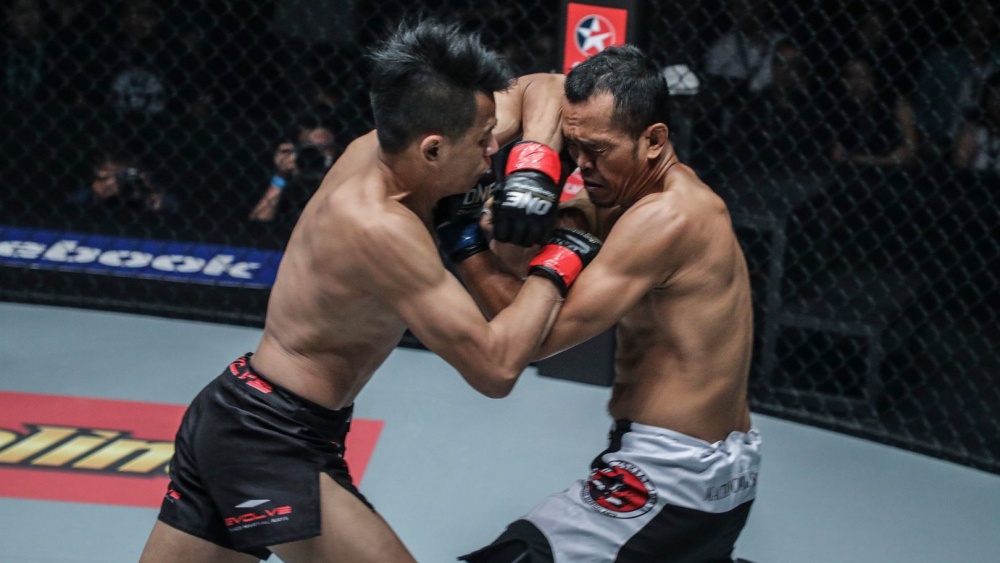
The Muay Thai clinch is a close-range grappling position where fighters use their hands, arms, and upper body to control their opponent’s head, neck, and posture. Unlike clinching in Western boxing, which is primarily used to smother offense and buy recovery time, the Muay Thai clinch is both an offensive and defensive weapon used to set up devastating knee strikes, sharp elbows, sweeps, and throws.
At its most basic level, the clinch involves reaching both hands around your opponent’s head, tightening your forearms against the sides of their neck, and pulling their posture down toward your chest. From here, you can begin working with knees, controlling their balance, and transitioning between different grip positions to maintain dominance.
What makes the clinch unique is the constant battle for control happening within it. Both fighters are hand-fighting, adjusting grips, working for angles, and looking for openings simultaneously. It is a chess match at close quarters, where superior technique, conditioning, and timing determine who comes out on top. In Thailand’s stadiums, judges reward fighters who demonstrate clear clinch dominance, and many of the sport’s greatest champions have been clinch specialists.
Grips are the foundation of effective clinch work. A grip is any position where your hands are locked together to create a strong connection with your arms, giving you control over your opponent’s posture and balance. Tight grips also provide relative safety from elbows and, in some positions, help you avoid getting kneed. Here are the six most important grip positions in Muay Thai.
1) Double Collar-Tie (Plum Clinch)
The double collar-tie is the most dominant and well-known clinch position in Muay Thai. With both arms inside your opponent’s, lock your palms together around their neck so that your gloves press down on the top of their head and your elbows are tight to their collarbone. With your elbows locked down, you can crank on their neck to break their posture while making it difficult for them to slide under your arms and counter with a body lock. Once their posture is broken, pulling them off balance for devastating knees to the body and head becomes straightforward.
2) The 50-50 Position
The 50-50 is a common stalemate position where neither fighter holds a clear advantage. It occurs when both fighters have a single collar-tie each, with their second arm wrapped around their opponent’s collar-tie arm, joining at the back of the neck. While not dominant on its own, a strong 50-50 grip is essential because it serves as the launching pad for transitioning into more dominant positions like the overhook or underhook. It can also neutralize a strong clincher’s attacks and buy time to reset.
3) Single Collar-Tie And Overhook
This grip combines the dominant collar-tie with tight arm control, giving you leverage to knee or sweep at will. You typically enter from 50-50, where one arm is inside controlling the neck while the other is stuck outside. Wind your outside arm underneath and inside your opponent’s elbow, punch your glove high toward the ceiling, then loop your arm over and around theirs, almost like a guillotine on their bicep, pulling their arm off your neck. From here, drop your weight and pull on the arm and neck to create space for powerful body knees, or pull them laterally into a sweep.
4) Single Collar-Tie And Underhook (Seatbelt)
Also known as the seatbelt, this is one of the most dominant positions in the clinch. From 50-50, when your opponent’s inside arm relaxes or you manage to remove their elbow from your collarbone, slide beneath it and pivot around their body so you stand at roughly ninety degrees with your head on their chest and their foot trapped between your legs. Lock your palms tightly together with your arms cutting from over their shoulder to under their armpit like a seatbelt. From this angle, your opponent has very limited defensive options, and you can deliver knees freely.
5) Cross-Face
The cross-face can be attached off the back of the underhook or seatbelt position and is one of the most punishing grips in Muay Thai. From the underhook, release the hand on the back of your opponent’s neck and thread your glove so it presses against the side of their face. Stand tall and push their face away by straightening your arm, then take your second hand and lock it over your first, pressing their head down with two fully extended arms. With their posture broken and your arms extended, they are defenseless against incoming knees, a position that can lead directly to a knockout.
6) Body Lock
The body lock is essentially a bear hug around your opponent’s body or chest. You will often find your way into this position when your opponent attempts a collar-tie with relaxed elbows, giving you the opportunity to slide underneath both arms and clasp your hands around their body. With your arms gripped securely beneath their armpits, you can knee freely without allowing them space to grip your neck. Several sweeps and dumps are available from this position, but be careful, squeezing your opponent directly backward is a foul in Muay Thai called “breaking the back,” and it can cause serious injury. Learn the proper body lock clinch throw technique instead.
Offensive Weapons In The Clinch
Once you have established a strong grip and broken your opponent’s posture, the clinch opens up a full arsenal of offensive tools.
1) Knees
Knees are the primary weapon of the clinch. From a strong position, you generate power by pulling your opponent’s head down while driving your rear leg forward into their ribs or midsection. Straight knees to the body sap energy over time, diagonal knees slip through small defensive gaps, and spear knees driven upward with precision are especially punishing. In competition, knees from the clinch score heavily and are one of the most effective ways to wear an opponent down physically and mentally. Experiment with throwing knees both up the middle and around the side to the outside ribs.
2) Elbows
Elbows are a dangerous secondary weapon, best used by more experienced practitioners. By releasing one hand and maintaining control with a single collar-tie, you create space to pull your opponent into a short, sharp elbow. Timing is critical; throwing elbows recklessly opens gaps that a skilled opponent will exploit. But when delivered with precision, clinch elbows can cut, disrupt focus, and change the momentum of a fight instantly.
3) Sweeps And Off-Balancing
Beyond strikes, the clinch is about controlling your opponent’s balance. Sweeps and trips send opponents to the canvas by shifting weight at the right moment or using the legs to hook and displace their base. While sweeps may not cause direct damage, they score well in competition, break rhythm, and send a clear message of dominance. Off-balancing your opponent also sets up follow-up strikes, catching their balance after a sweep attempt leaves them vulnerable to knees and elbows.
4) Movement And Angles
The clinch is not a static position. Using your grip to push, pull, and whip your opponent creates angles that serve your offense. Releasing the clinch at the right moment while your opponent is off-balance gives you a window to land powerful shots, including kicks, as they recover. Keeping your opponent constantly moving and catching their balance prevents them from mounting any meaningful defense.
Tactical Principles For Clinch Fighting
Understanding grips and strikes is only half the equation. The fighters who consistently dominate the clinch do so because they understand the tactical principles governing this range.
1) Win The Inside Position
The constant battle for inside control, getting your hands inside your opponent’s arms to control the neck, often decides who dominates a clinch exchange. Hand fighting, the subtle process of slipping your hands inside and controlling wrists or biceps, may not look dramatic, but it is the foundation of clinch dominance.
2) Maintain Two Points Of Control
The fighter who controls the clinch controls where the fight goes. A reliable principle is to always maintain at least two points of control, for example, the head and one arm, or the neck and a body lock. With two points of control, your opponent’s offensive options are severely limited, and you dictate the pace.
3) Break And Deny Posture
When your opponent’s posture is broken, head pulled down, spine curved, balance compromised, it becomes extremely difficult for them to defend or attack. Your job is to break their posture quickly using your grips and body weight, then prevent them from straightening back up. Equally, protecting your own posture is critical. If your opponent controls your neck or head, they control your balance. Keep your hips close to theirs and maintain a stable base with your legs slightly wider than shoulder width.
4) Know When To Clinch
The clinch is most effective in specific situations: when an aggressive opponent is pressuring you, and you need to shut down their momentum, against close-range fighters where you want to control the space, and when your opponent is clinching you repeatedly and you need to reverse the position. It is also a strong tactical choice when you want to change the pace of a fight or tire out an opponent.
Training The Clinch
Training the clinch demands dedicated conditioning, repetition, and the ability to stay calm under pressure. In most serious Muay Thai gyms, fighters spend entire sessions on clinch work, drilling positional control, hand fighting, and knee combinations.
Neck and core strength are heavily emphasized because they are essential for resisting your opponent’s pulls and maintaining balance. If your neck is weak, even perfect technique will not save you from a strong clincher.
Clinch sparring with a trusted training partner is one of the best ways to develop timing and the instinct for transitions that only comes from live repetition. Start at a lower intensity, focusing on positions and movement, and gradually increase as your technique improves.
Training at a gym with experienced clinch fighters makes a significant difference. At gyms like Evolve MMA in Singapore, where multiple Muay Thai World Champions are part of the coaching staff, students get hands-on clinch instruction from fighters who have used these techniques at the highest levels of competition.
Frequently Asked Questions About Muay Thai Clinch
Q: What Is The Muay Thai Clinch?
A: The Muay Thai clinch is a close-range grappling position where fighters control an opponent’s head, neck, and posture using their hands, arms, and upper body. Unlike the clinch in boxing, which is primarily defensive, the Muay Thai clinch is a fully offensive position used to deliver knees, elbows, and sweeps while controlling the opponent’s balance.
Q: What Is The Most Dominant Clinch Position In Muay Thai?
A: The double collar-tie, also known as the plum clinch, is widely considered the most dominant position. It involves locking both hands behind the opponent’s head with your elbows tight to their collarbone, allowing you to break their posture and deliver powerful knees. That said, the single collar-tie with underhook (seatbelt) is arguably even more dominant when executed correctly, as it gives you a sharp angle with very few defensive counters available to your opponent.
Q: How Do I Get Better At The Muay Thai Clinch?
A: Consistent clinch-specific training is the key, drilling grip positions and transitions, building neck and core strength, and spending time in live clinch sparring with a training partner. Start at a lower intensity and gradually increase as your technique and conditioning improve. Training under experienced instructors who have competed at a high level will accelerate your progress significantly.
Q: What Strikes Can You Throw From The Clinch?
A: The primary strikes are knee strikes — straight knees, diagonal knees, and spear knees to the body and head. Elbows are also effective when you release one hand to create space for a short, sharp strike. Fighters also throw short punches and use clinch control to set up kicks on the release.
Q: Is The Clinch Legal In Muay Thai Competition?
A: Yes, the clinch is fully legal and is one of the defining features of the sport. Fighters are allowed to clinch, strike from the clinch, and execute sweeps. Judges reward clear clinch dominance when scoring rounds. The one restriction is “breaking the back” — throwing an opponent directly backward from a body lock, which is a foul due to serious injury risk.
Q: How Important Is Neck Strength For Clinch Fighting?
A: Neck strength is critical. Your ability to resist your opponent pulling your head down determines whether you can maintain posture and fight effectively from the inside. Fighters with weak necks will struggle in the clinch regardless of technical knowledge. Most serious Muay Thai programs include specific neck conditioning exercises in their regular training.
Q: When Should I Use The Clinch In A Fight?
The clinch is most effective when your opponent is pressuring aggressively, when fighting someone who prefers close range, or when your opponent is clinching you and you need to reverse the position. It is also a strong choice for changing the pace of a fight or tiring out an opponent.
Q: Can Beginners Learn The Muay Thai Clinch?
A: Absolutely. While mastering the clinch takes years, beginners should start learning basic positions early. The double collar-tie and 50-50 provide a strong foundation, and low-intensity clinch sparring builds comfort without excessive damage. Many gyms in Singapore and around the world incorporate clinch fundamentals into their beginner programs.
You may also like:
Pressure Vs. Precision: Which Style Suits You Best?

Summary The right words at the right time can change how you train, think, and live. These motivational quotes from various martial artist are not just inspiring lines. They are reminders that growth happens when you…
Summary In a sport where youth is often mistaken for inevitability, Sam‑A Gaiyanghadao continues to challenge expectations. Still competing at the highest level in ONE Championship, Sam-A is not fighting to preserve a legacy. He…
Summary Kids who train in martial arts burn a lot of energy, physically and mentally. Good nutrition and smart recovery habits help them stay healthy, focused, and excited for their next class. This guide breaks…
You know that feeling, the one where you stare down the weighing scale, hoping the number’s budged, only to see the same stubborn digits again. You’ve cut carbs, done late-night treadmill guilt sessions, and even…
Following the success of ONE 172, fight fans in Japan and around the world are hungry for more action. From lightning-fast knockouts by Muay Thai icon Rodtang Jitmuangnon to high-level MMA finishes by Japan’s own…
In a city as fast-paced and high-performing as Singapore, finding time to take care of your health can feel like a luxury. Between juggling demanding jobs, long commutes, and constant digital distractions, our urban lifestyle…
Summary In boxing, knockouts are rarely accidental, they are the result of precise technique, timing, and the effective use of high-impact punches. This article highlights three of the most effective knockout punches: the cross, the…
Summary Everyone has a natural fighting style. Some instinctively look to bombard opponents with volume, while others prefer a more cautious approach. Some people feel more comfortable throwing strikes at attackers, while others prefer to…
Summary Oleksandr Usyk is considered one of the greatest boxers today. Still undefeated, Oleksandr has recently defeated boxing heavyweight giants like Anthony Joshua (twice), Daniel Dubois, and Tyson Fury (twice). While he’s still relatively new…
Summary Becoming a great fighter in martial arts requires more than strength, speed, or endurance—you must also be smart. While most martial artists typically aren’t viewed as the most cerebral members of society, there are…
Summary Brazilian Jiu-Jitsu is a constantly evolving martial art that rewards those who explore new positions and attacking strategies. The arm saddle is one of the more advanced yet highly effective positions that have gained…
Summary Combat sports like Brazilian Jiu-Jitsu, Muay Thai, boxing, wrestling, and MMA push athletes to their physical and mental limits. Success in these disciplines doesn’t just come from skill and conditioning but also from proper…