




















Summary
Age is not the barrier most people assume it is when it comes to starting Muay Thai. People in their 40s, 50s, and 60s train the art of eight limbs all over the world every day, not as a compromise or a modified version of the real thing, but as full participants in one of the most complete and rewarding martial arts ever developed. The benefits of Muay Thai for older beginners are well-documented and wide-ranging: improved cardiovascular health, increased strength and mobility, better coordination, lower stress levels, and a sense of physical confidence that carries into every area of life. What changes with age is not whether you can train, but how intelligently you need to approach it. This article covers seven essential tips for starting Muay Thai in your forties and beyond — from managing your training load and protecting your recovery, to fuelling correctly and building the consistent habits that produce lasting results. As Muay Thai World Champion and Evolve MMA instructor Chaowalit Jocky Gym puts it, “I have seen students start Muay Thai in their forties and become genuinely skilled, confident fighters. Age changes the timeline — it does not change the destination. The students who succeed are the ones who train with patience and consistency, and who respect what their body needs to keep showing up.” Whether you are stepping into a gym for the first time or returning to training after years away, these tips will help you build a Muay Thai practice that is sustainable, safe, and deeply rewarding.
Key Takeaways
- There is no age limit on starting Muay Thai, but how you start matters enormously. Older beginners who approach their first months of training with patience and intelligence progress more reliably and with fewer setbacks than those who try to match the pace of younger, more conditioned students from day one.
- Recovery becomes the training variable that matters most as you get older. The ability to absorb training load and return to the gym fresh is the foundation on which everything else is built. Warm-ups, cool-downs, sleep, nutrition, and active recovery tools are not optional extras; they are the infrastructure that keeps you training consistently.
- Technique development at slower speeds is not a compromise. It is the correct method. Learning movement patterns slowly and correctly before adding power protects joints and muscles that are less forgiving of poor mechanics than they were twenty years ago, and produces a cleaner technique that holds up better under pressure.
- Consistency over months and years produces transformative results regardless of starting age. Two to three well-structured sessions per week, maintained consistently over a year, will produce fitness, skill, and confidence that casual or sporadic training at any age cannot match.
- Nutrition and hydration directly influence how quickly your body adapts to training. Older bodies are less forgiving of poor fuelling than younger ones. Adequate protein, balanced carbohydrate intake around training, and consistent hydration are not advanced performance nutrition — they are the basics that make the difference between recovering well and feeling chronically beaten up.
- Muay Thai at 40+ is a lifestyle investment with compounding returns. The physical and mental benefits of regular Muay Thai training — cardiovascular health, mobility, stress reduction, cognitive sharpness — compound over time in a way that most forms of exercise do not, because the technical and strategic depth of the art keeps your mind as engaged as your body.
Tips For 40+ Year Olds Starting Muay Thai
Let’s take a close look at some of the things you should keep in mind when starting Muay Thai in your forties:
1) Take Things Slow
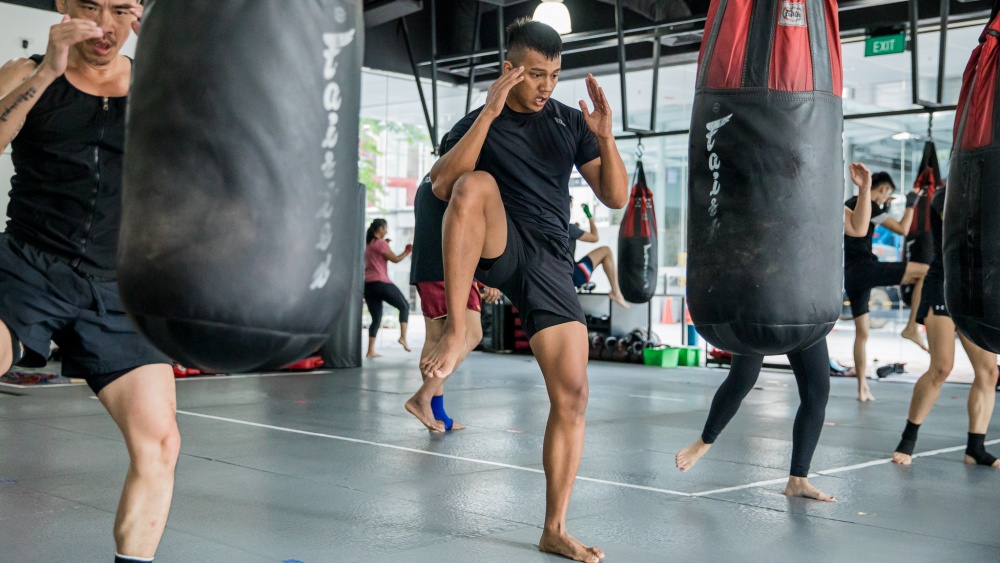
It’s easy to get excited about starting something new, and you’ll probably be hooked on Muay Thai after your first training session. You naturally will want to go back and train multiple times during the same week to get more of the same feeling. However, your body isn’t yet used to the rigors of practicing Muay Thai, so that’s not the best way to approach your training.
Instead of attending Muay Thai classes as often as possible, assess your current fitness level and devise a training schedule your body can keep up with. Stay committed to your training, and you’ll eventually be able to train as often as you want.
You should also listen to your body when you first start training. Try not to train when your entire body is sore. That’s a sign that your muscles need a little more time to recover.
2) Don’t Put Everything Into Your Strikes When You Start Training
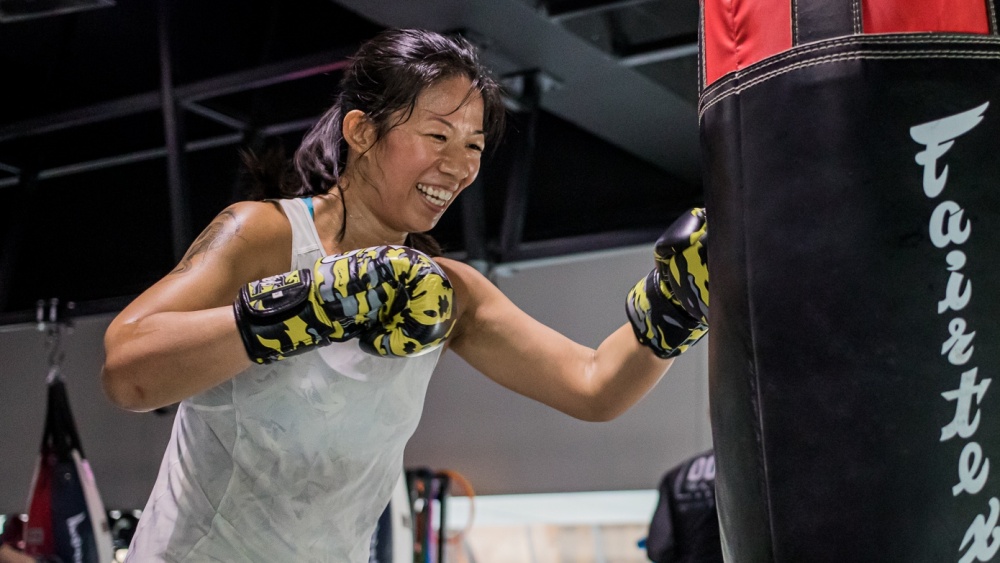
This ties into the first point listed above. You’ll learn many new techniques your body isn’t familiar with, so take things easy when you first start drilling techniques. For example, throwing a teep puts a lot of pressure on your hamstrings in a way most people aren’t used to, while roundhouse kicks (and many other techniques) do the same with your hips.
Practice moves slowly to give your body a chance to get used to the movements before attempting full power shots.
3) Reduce Other Physical Activity
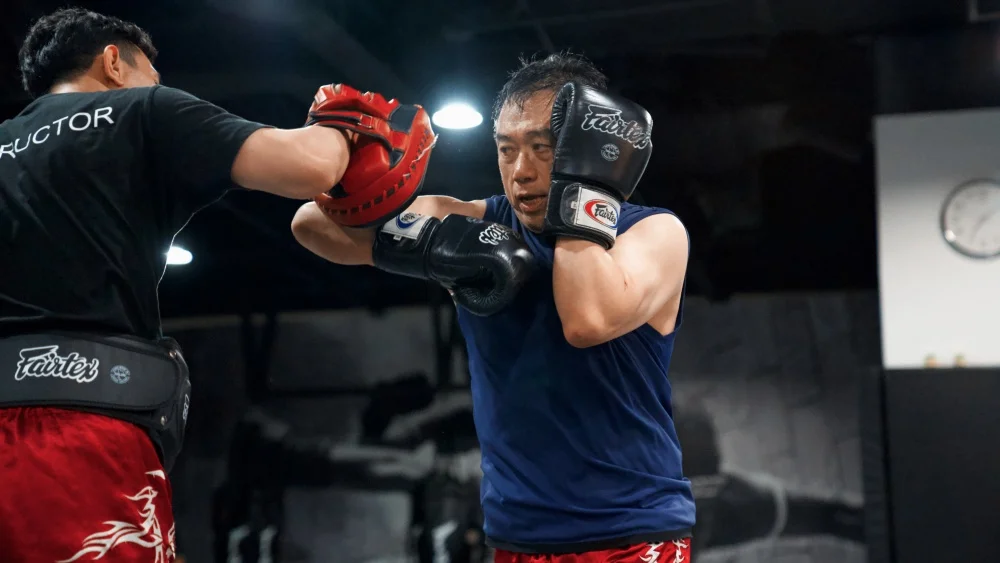
If you already had a fitness routine before starting Muay Thai, reduce the amount of non-Muay-Thai related physical exercise you do. This is only a temporary change to make it easier for your body to adjust to the rigors of training Muay Thai. Adding Muay Thai to an already thorough fitness program is a recipe for overtraining.
Once your body gets used to Muay Thai training, you can gradually restore your other fitness activities.
4) Train Intelligently
At 40+, you’re in no position to ignore safe practices like warming up before workouts and cooling down properly after training. Doing these things significantly impacts how quickly your body recovers from each training session. It can even be the difference between you being able to train in Muay Thai at your age consistently and having to take a break from training.
Your warm-ups should consist of dynamic stretches like jumping jacks and light cardio like jogging around the gym. Anything that gets your blood flowing and heart pumping serves as a warm-up. Your cooldowns should consist primarily of static stretches. Stretch all your major muscles after class to remove all the tension built up in them. This significantly reduces delayed-onset muscle soreness (DOMS). As a result, you’ll be able to train in Muay Thai more often.
You should also consider using workout recovery tools like ice baths, foam rollers, and massage guns to help with post-workout recovery.
5) Train Consistently
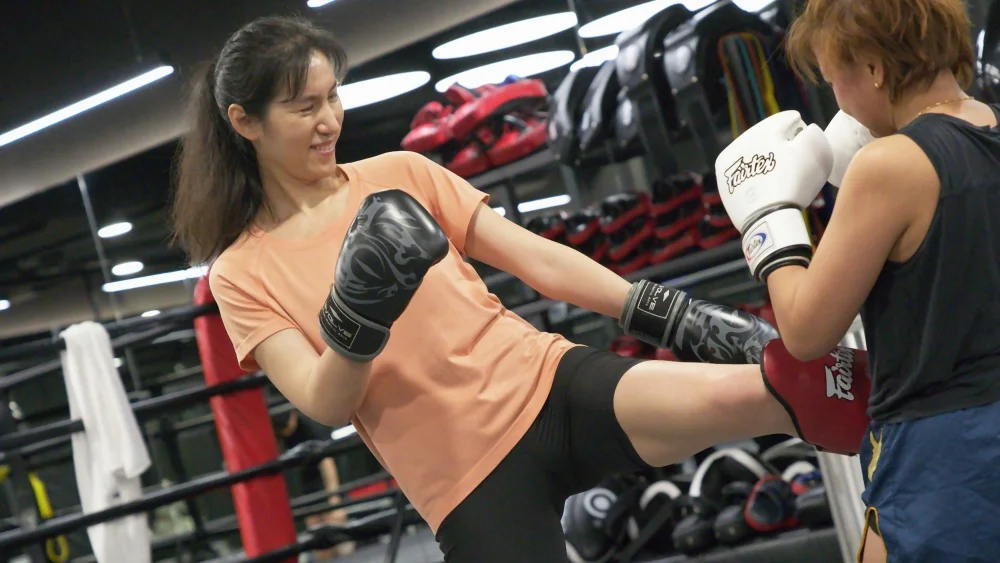
You’ll need to train consistently to enjoy the countless benefits of Muay Thai like increased muscle strength, improved cardiovascular endurance (and the health benefits associated with that like lower blood pressure and a reduced risk of heart disease), improved mobility, improved motor skills, improved muscle definition, enhanced immune system, and reduced stress levels.
Training sporadically limits these benefits and slows down your progression. Set your training schedule and stick to it. Ideally, aim to train two or three times per week when you’re first starting. You can add more training sessions once your body adjusts to the physical demands of training.
6) Fuel For Recovery
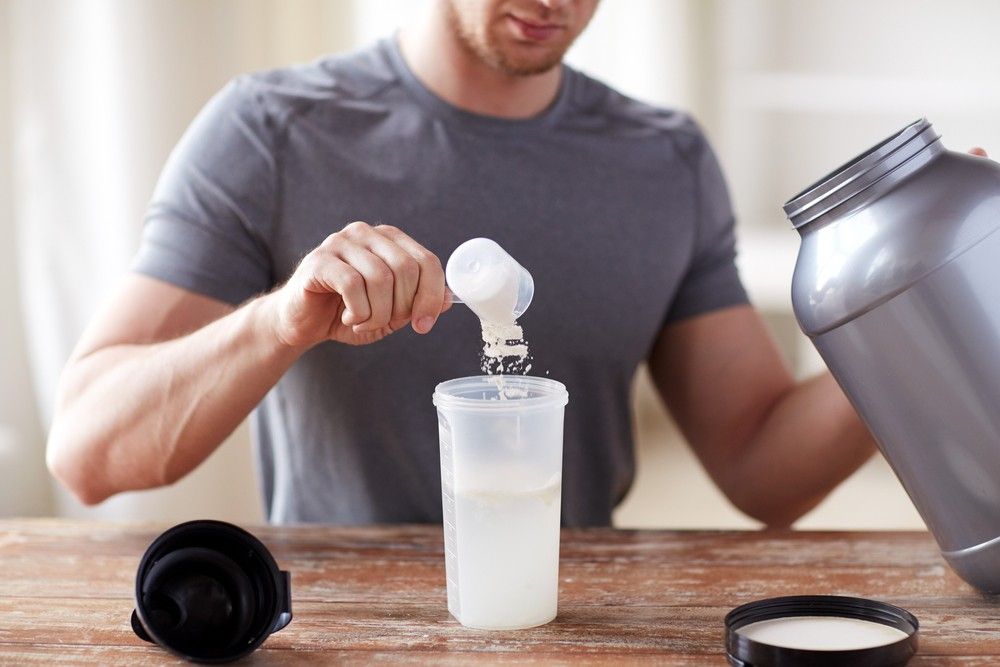
Being a little more disciplined with the things you eat will make it easier for your body to adjust to training Muay Thai. Your body will use up more calories when you first start training since many of the movements and techniques you drill are new to you, so load up on carbohydrates before training to ensure you have enough fuel to power through your training session.
Getting the proper nutrients into your body right after training also makes it easier to manage recovery. Protein shakes are an excellent post-workout meal choice since they are rich in proteins and other nutrients your body needs to recover. Proteins are the building blocks of muscle, so make sure your body has all the protein it needs to repair tissues damaged during training. You’ll recover faster, and your muscles will grow quicker.
Avoid overly restrictive diets when you first start training since they often restrict your carbohydrate intake. Instead, craft meals that are about properly balanced in terms of protein, carbs, healthy fats, vegetables, and fresh fruits.
7) Stay Hydrated
Muay Thai gives you a mix of aerobic and anaerobic exercises, so you’re going to work up a sweat every time you train. Make sure you’re well hydrated before, during, and after training. Your training sessions will go much smoother when you’re adequately hydrated, and you’ll be less likely to cramp up during training.
Frequently Asked Questions About Starting Muay Thai At 40+
Q: Is Muay Thai Safe To Start In Your 40s, 50s, Or 60s?
A: Yes — with the right approach, Muay Thai is a safe and highly beneficial activity for adults of all ages. The key distinction is between training Muay Thai and competing in Muay Thai. Training — which covers pad work, bag work, drilling, shadowboxing, and controlled sparring — is accessible to older beginners and carries no more injury risk than other forms of vigorous physical exercise when approached intelligently. The tips in this article — starting slowly, warming up and cooling down properly, not overloading your training schedule, and practising technique at controlled intensity before adding power — are the practical framework for keeping training safe and sustainable at any age.
Q: Will I Be Able To Keep Up with Younger Students In A Muay Thai Class?
A: In most gyms, classes are structured to accommodate a range of fitness levels and ages, and good coaches calibrate the demands of each session to what students can manage. In your early months, you may find that your cardiovascular conditioning lags behind that of younger students. This is entirely normal and improves with consistent training. What older beginners often find is that they compensate with focus, patience, and a willingness to learn carefully, which many younger students lack. Technical development, which is ultimately what Muay Thai is built on, has no age ceiling. You will be working at your own pace within a shared class environment, not in direct competition with anyone.
Q: How Long Will It Take To See Results From Muay Thai Training At 40+?
A: Most beginners notice meaningful fitness improvements — better cardiovascular endurance, improved mobility, and increased muscle tone — within six to eight weeks of consistent training at two to three sessions per week. Technical results, where your strikes feel clean, and your defensive responses become more automatic, typically begin to emerge within three to six months. The compounding nature of Muay Thai development means that improvements accelerate over time rather than plateauing — the more skilled you become, the more efficiently you train, and the more benefit each session produces. At 40+, the timeline may be slightly longer than for a twenty-year-old, but the trajectory is the same.
Q: Do I Need To Be Fit Before Starting Muay Thai?
A: No. Muay Thai training will build your fitness — you do not need to arrive already fit to participate. Many beginners in their 40s and beyond come to their first class with no martial arts background and limited recent exercise history, and coaches at reputable gyms are accustomed to working with this starting point. What helps is being honest with your coach about your current fitness level and any pre-existing physical limitations or injuries. This allows them to suggest appropriate modifications and give you realistic expectations about the early weeks of training, which are physically demanding for most beginners regardless of their starting fitness level.
Q: How Important Is Sleep And Recovery For Older Muay Thai Practitioners?
A: Critically important — and increasingly so with age. Sleep is when the body repairs the tissue damage incurred during training, consolidates motor patterns learned during the session, and regulates the hormones that govern recovery and adaptation. Insufficient sleep slows all of these processes, which means older practitioners who are already working with a longer natural recovery timeline are particularly affected by poor sleep habits. Aim for seven to nine hours per night, and treat sleep as a training variable with the same seriousness as nutrition or session frequency. Active recovery tools — foam rolling, light stretching, contrast showers, and massage — are valuable supplements to sleep rather than replacements for it.
Q: Can I Spar In Muay Thai At 40+ Or Is It Too Risky?
A: Sparring is accessible to older practitioners, but the approach matters. Controlled, technical sparring at low intensity — where both partners are focused on technique rather than landing hard strikes — is a valuable and manageable training tool at any age. Full-contact or hard sparring carries more risk and is generally not necessary unless you are training for competition. Many older practitioners who train purely for fitness, self-defense, and the enjoyment of the art choose to do little or no hard sparring, and their Muay Thai development is not meaningfully limited by that choice. The decision should be made in consultation with your coach based on your goals, physical condition, and the culture of your gym.
Q: What Equipment Do I Need To Start Muay Thai Training At 40+?
A: For your first few sessions, most gyms will provide or loan the essential equipment — gloves, hand wraps, and possibly shin guards — so you do not need to invest heavily before you know you are committed to training. Once you decide to continue, the core equipment you will need to purchase is a pair of boxing gloves (14 or 16 oz for sparring), hand wraps, shin guards, a mouthguard, and groin protection. Muay Thai shorts are optional but practical given their design for the kicking range. Avoid buying the cheapest available options for contact equipment — gloves and shin guards that fit well and offer genuine protection are worth the investment, particularly for older practitioners whose injury resilience is more limited than it was twenty years ago.
Final Thoughts
Starting Muay Thai at 40 is not a consolation version of starting at 20. The art is the same, the techniques are the same, and the rewards — physical, mental, and social — are the same. What changes is the intelligence with which you need to approach the process: more attention to recovery, more patience with progression, more respect for what your body is telling you, and more emphasis on the long game over short-term intensity.
The students who start Muay Thai in their forties and keep training into their fifties and beyond are not exceptional athletes. They are people who found something that made them feel genuinely alive, treated it with enough care to keep doing it sustainably, and allowed the compounding benefits of consistent training to accumulate year after year.
You are not too old. You are exactly the right age to start. Begin with the tips in this article, find a gym with coaches who understand how to work with adult beginners, and give yourself the time the process deserves. The version of yourself on the other side of a year of consistent Muay Thai training will be worth every session it took to get there.
You’re The Right Age For Muay Thai
Don’t let the mental barrier of being 40 hinder you from trying this amazing sport. There are 40-year-olds that are reaping the benefits of training Muay Thai worldwide, and you can be one of them. Attend one of Evolve MMA‘s complimentary introductory classes to see what training is like for yourself.
Book your complimentary trial class with our World Champions below!
If you have any other questions regarding Evolve MMA and the programs we offer, you can get in touch with our membership executives at the following locations:
Evolve MMA (CBD)
18 Cross St
#B1-08
Singapore 048423
Phone: (65) 6536 4525
Evolve MMA (Orchard Central)
181 Orchard Road
#06-01 Orchard Central
Singapore 238896
Phone: Evolve MMA (KINEX)
11 Tanjong Katong Road
#02-52 KINEX
Singapore 437157
Phone: Evolve MMA (Star Vista)
1 Vista Exchange Green
#02-26A The Star Vista
Singapore 138617
Phone: (65) 6539 9590

Summary Muay Thai is one of the most rewarding martial arts you can train in — and one of the most demanding to develop genuine competence in. The path from complete beginner to confident, well-rounded…
Summary Stepping into sparring with a training partner who is significantly larger than you is one of the most instructive and most intimidating experiences in Muay Thai. The size and strength advantage your opponent carries…
Summary The spear knee, also known as the straight knee, is one of the first knee techniques taught in Muay Thai and one of the most important to master. Driven forward with hip power and…
Summary Kicks are the defining weapons of Muay Thai, more powerful than punches, higher scoring in the eyes of judges, and capable of ending a fight at any moment. Unlike boxing, which limits fighters to…
Summary Conditioning is the invisible foundation beneath every technique in Muay Thai. You can have perfect form on your kicks, sharp timing on your counters, and excellent ring awareness — but without the physical capacity…
The body clinch and throw is an effective technique, commonly used by many Muay Thai fighters when they are locked in a clinch battle with a taller opponent. If you are ever up against a…
Summary Switch-hitting, the ability to seamlessly change stance mid-fight, is one of the rarest and most tactically disruptive skills in Muay Thai. When executed correctly, it forces opponents to process strikes coming from unfamiliar angles,…
Summary Sparring is one of the most valuable tools in Muay Thai training, and one of the easiest to misuse. Done correctly, it accelerates technical development, builds fight-ready timing, and creates the kind of pressure-tested…
Summary Learning combinations is one of the most important steps in developing effective striking in Muay Thai and kickboxing. A single well-placed strike can score, but a well-constructed combination, one that attacks multiple levels, creates…
Summary Muay Thai‘s power as a striking system lies not in the complexity of its techniques, but in the seamless way those techniques combine. A jab sets up a cross, a cross sets up a…
Summary The teep , Muay Thai‘s push kick, is often introduced to beginners as a distance control tool, but its true value is revealed when you learn to chain it into combinations. Used in isolation,…
Summary The teep, also known as the push kick, is one of Muay Thai’s most fundamental and frequently used techniques. Functionally, the kicking equivalent of the jab, it controls distance, disrupts rhythm, sets up combinations,…